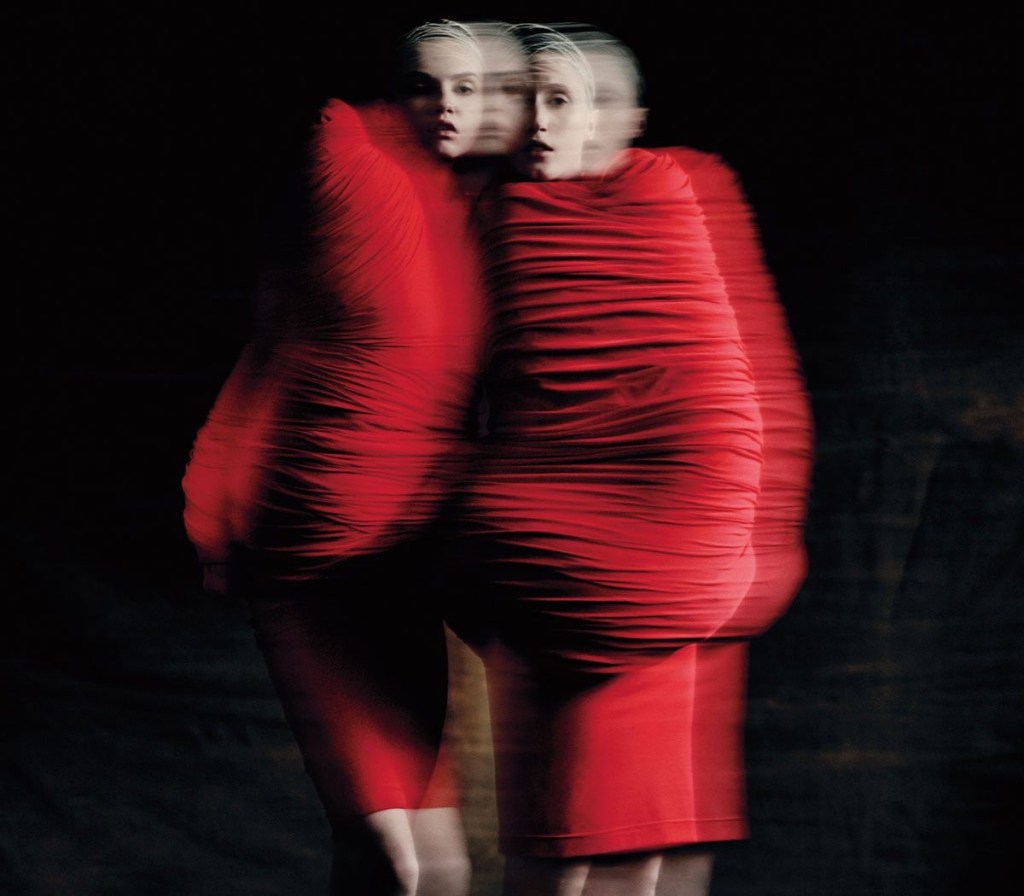
Since establishing Comme des Garçons in 1969, designer Rei Kawakubo has turned the conventional notions of gender, beauty, and cloths-making upside down. He continued to create iconic pieces by symmetry, scultural forms, conbing fabric layered, wrapped or draped in an unusual ways. The designs manage to retain elements of classical form, such as the shape of a bodice or the cut of a jacket while he was taking inspiration from souces like frog, crow, and crumpled pillow.
For spring/summer 1997 collection, “Body Meets Dress, Dress Meets Body,” Kawakubo explored the female silhouette by manipulating garments with padding garments in unexpected places to create soft bumps.

Subsequent collections, such as “Adult Punk (Demolition and Reconstruction)” in autumn/winter 1997-98, showcased her penchant for deconstruction, where conventional shapes were disassembled and reimagined with sheer or patterned fabrics. In “Clustering Beauty” (spring/summer 1998), Kawakubo experimented with draping and pleating techniques in neutral muslins to produce striking sculptural forms.
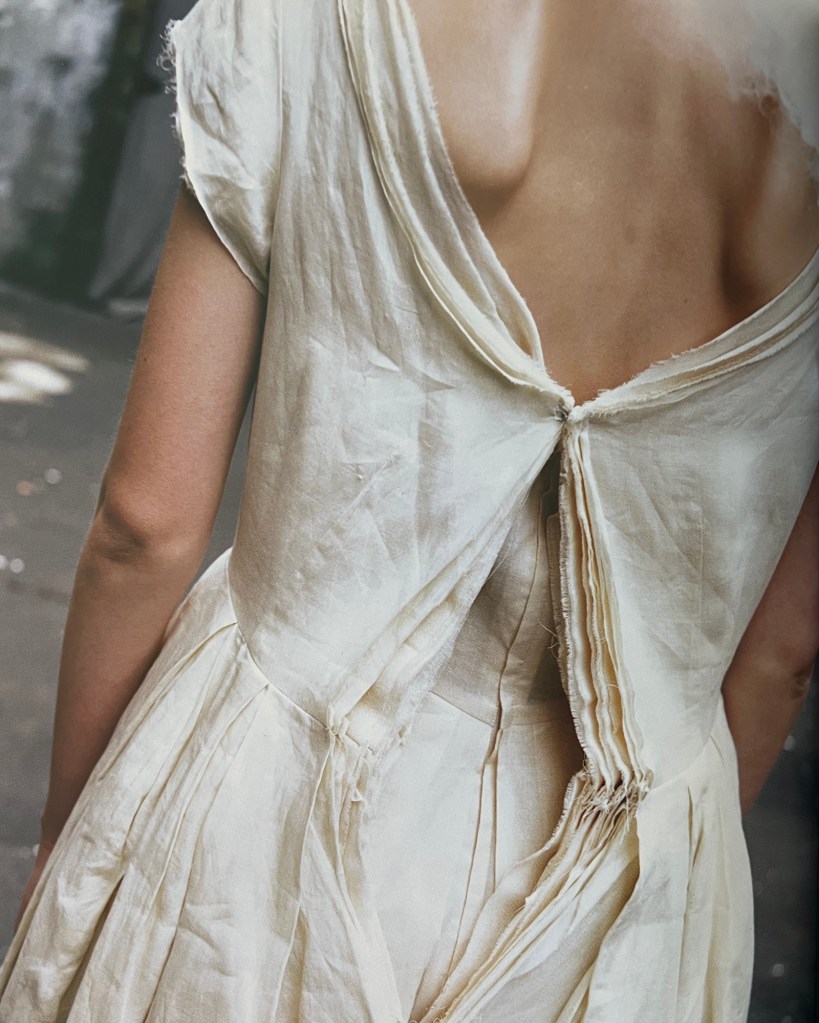
Her exploration of silhouette continued with collections like “Fusion” (autumn/winter 1998-99) and “New Essential” (spring/summer 1999), where she disrupted simple designs by altering one side fully formed while the other remained unfinished.
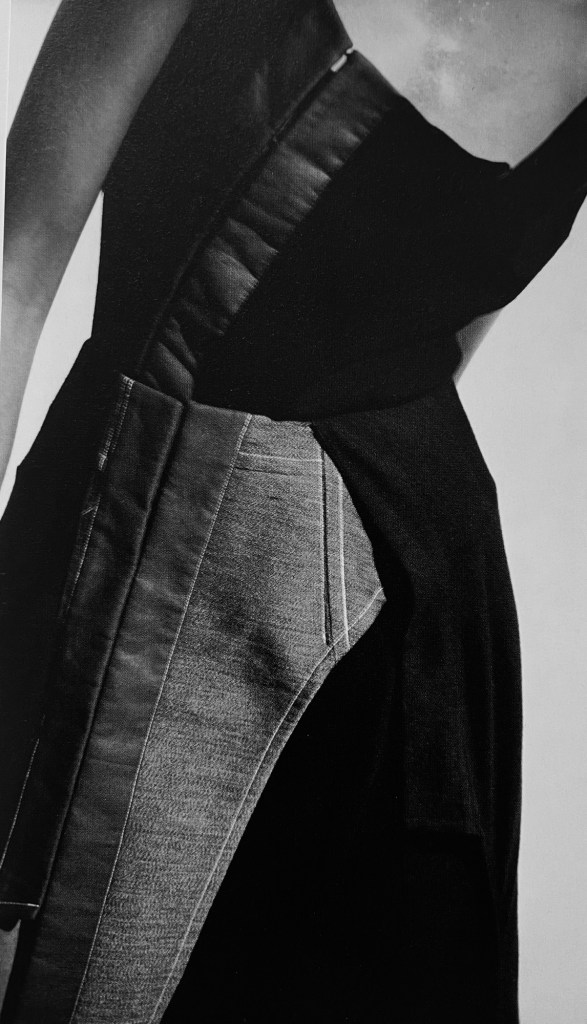

Kawakubo’s spring/summer 2004 collection, “Excellent Abstract,” further emphasized this concept, as she focused on skirts with radical shapes, employing circular and trefoil cuts to give the skirts structure and cause them cantilever away from the body.

She underlined her guiding principle that a garment is similar to a building and is spatial construction.
For BEYOND TABOO collection Autumn/Winter 2001-02, please visit the Vogue link
For HARD AND FORCEFUL collection Autumn/Winter 2000-01, please visit the Vogue link.
 Fashionecture