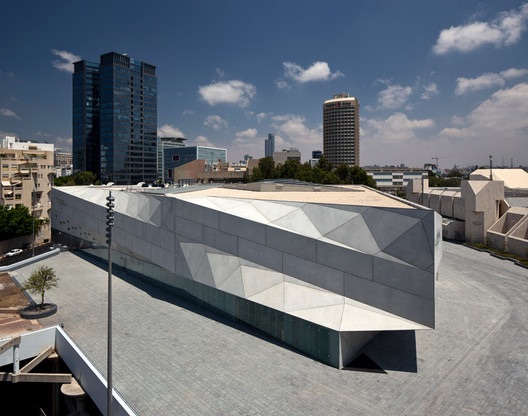
Preston Scott Cohen’s architectural philosophy is deeply rooted in the exploration of complex geometry, which serves as a transformative tool in his design process. His approach to challenging sites, programmatic limitations, and intricate spatial configurations has led to a distinctive formal expression, as seen in notable projects such as the unbuilt Cornered House (1991) and Torus House (1998-2000), alongside the more realized Tel Aviv Museum of Art (2003-2008).

Cohen’s journey in architecture illustrates a significant evolution from meticulous hand-drawn geometric projections to embracing advanced computer-generated designs. Early projects exhibit an intricate understanding of geometry that would later inform his large-scale works, demanding innovative engineering and construction methodologies. For instance, Cornered House in Longboat Key reinterprets the classic American suburban home through projective geometry, where traditional elements like the pediment and hipped roofline intertwine to create dynamic folded surfaces, thus altering perceptions of volume and form.
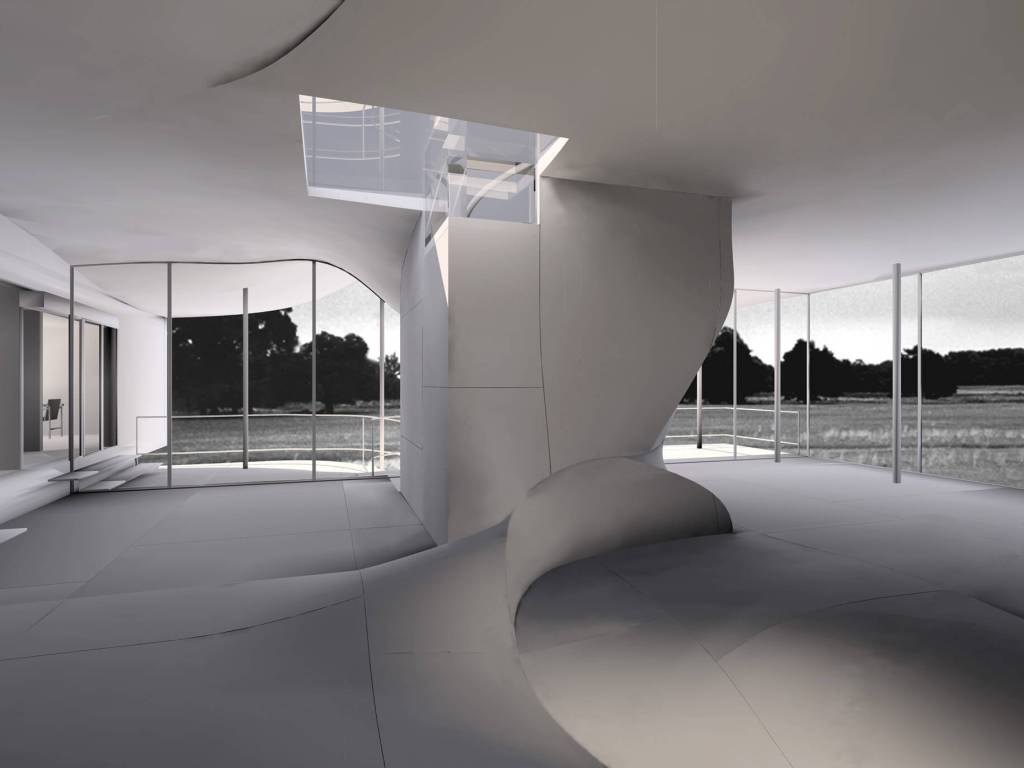
In Torus House, designed for a landscape painter, Cohen further explores the connection between architecture and its natural surroundings. The building’s design leverages curvilinear forms that engage with traditional orthogonal elements—floor, walls, and ceiling—creating a seamless connection with the rolling landscape of Old Chatham, New York. The toroidal shape, reminiscent of a doughnut, enhances the spatial fluidity and visual continuity of the interior with the exterior environment.

Cohen’s work reached a significant milestone with his design for the Tel Aviv Museum of Art, which emerged from an international competition. The expansive 180,000-square-foot building is a remarkable synthesis of oblique lines and hyperbolic parabolas. Its twisting façades create a dynamic sequence for visitors, guiding them through the museum’s spaces. Inside, a spiraling atrium dramatically channels natural light into the galleries situated three stories below ground, showcasing Cohen’s ability to manipulate space and light.
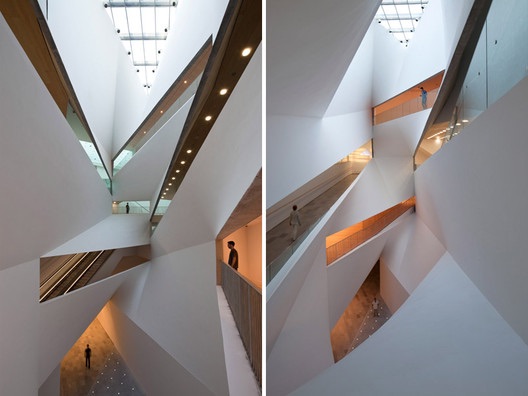
The museum’s design addresses the challenges posed by its triangular site and the need for flexible gallery spaces, creating a dialogue between the idiosyncrasies of the site and the requirements of contemporary art display. Cohen’s architectural language embodies a fusion of Baroque and modern spatial concepts, resulting in structures that reflect a contemporary sensibility while pushing the boundaries of traditional architectural forms. His work ultimately exemplifies how geometry can redefine the experience of architectural space, offering new narratives and interactions within the built environment.

 Fashionecture