Hussein Chalayan is a pioneering designer whose work transcends traditional fashion, merging elements of art, culture, and technology. His collections often reflect deep personal narratives and broader social themes, particularly concerning identity, migration, and the complexities of cultural heritage.
In his collection “Between” (spring/summer 1998), Chalayan made a powerful statement on the dynamics of veiling and unveiling, using the chador on a group of models, varying the legth of each to progressively reveal their bodies until only a face was left veiled.

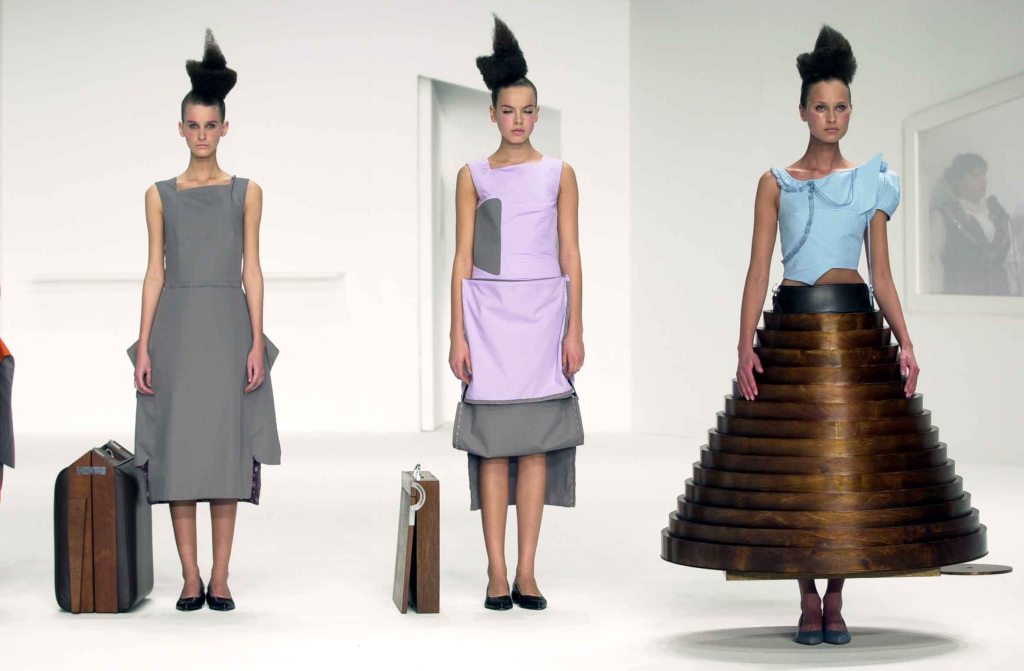
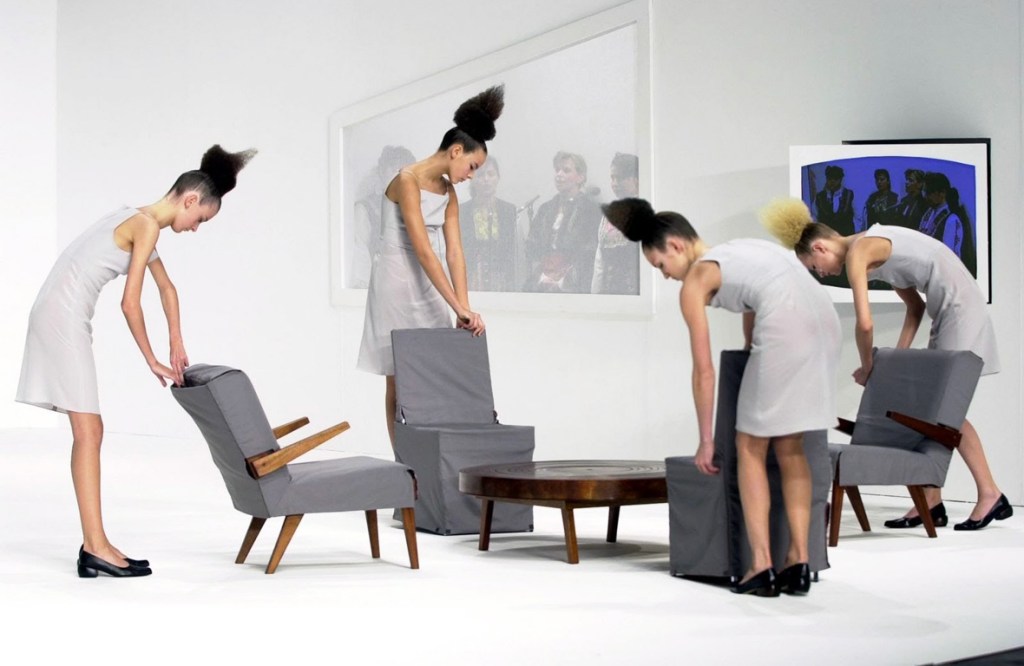
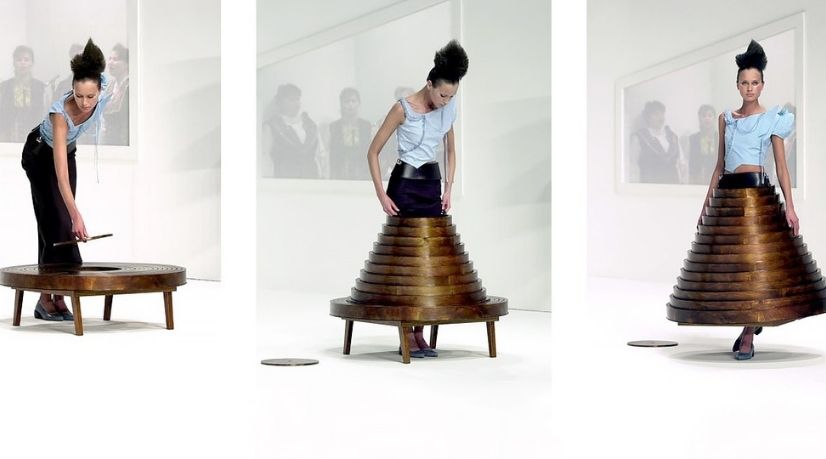
His “Afterwords” collection (autumn/winter 2000-01) further delved into themes of displacement and the emotional weight of leaving one’s home. By transforming ordinary household items into garments, Chalayan created a stage with four chairs and a coffee table, models entered and converted the furnishing into garments for themselves, the chairs transformed into suitcases and their covers into dresses. At the end the coffee table transformed into a skirt.
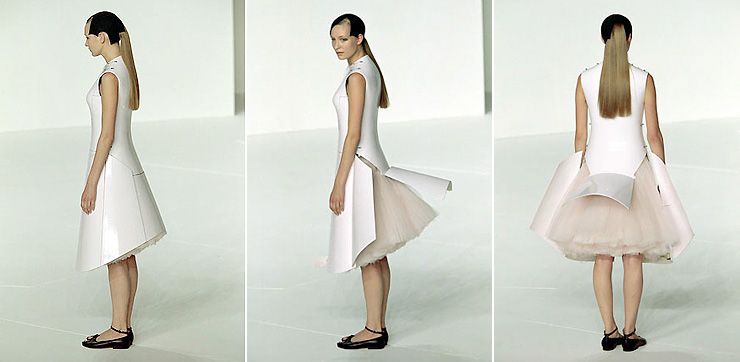
Chalayan’s innovative use of materials such as Tyvek and fiber-glass showcases his commitment to redefining fashion as a medium. His creations range from functional to purely aesthetic, exemplified by the “Aeroplane” and “Mechanical” dresses, which serve practical purposes while simultaneously challenging traditional notions of femininity and form. In contrast, his shaved tulle dresses exemplify a more decorative approach, demonstrating his ability to blend artistry with wearability.
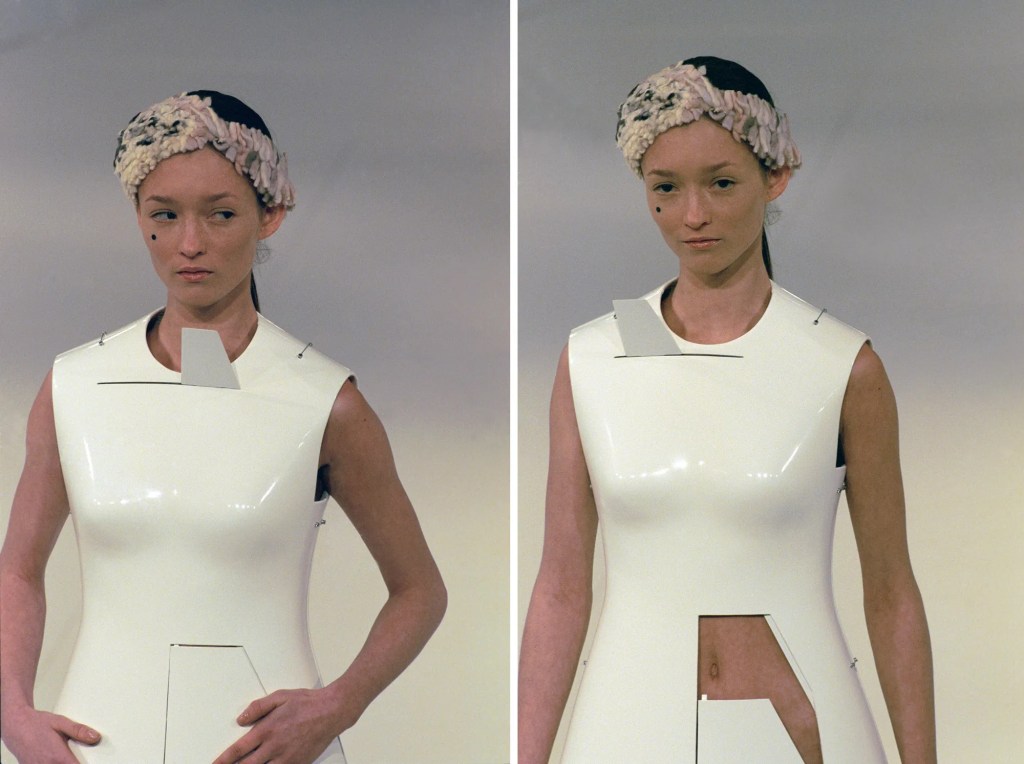
Overall, Chalayan’s work invites viewers to engage with profound questions about culture, identity, and the human experience, positioning him as a significant figure in the intersection of fashion and contemporary art.
 Fashionecture